
Last updated October 30, 2026
 Metal roofing
 Architectural shingles
 Tile roofing
 GAF
 Owens Corning
 Flat & low-slope
Free roof inspection with deck photos before we talk money - GAF and Owens Corning certified installation
Seasonal Roofing Care for Newport Beach: Year-Round Homeowner’s Guide
Most roofing guides assume every home lives by the same four seasons. Newport Beach doesn’t. We don’t get snow, we rarely see frost, and the biggest threat to your roof isn’t a winter freeze, it’s the compounding damage that runs from the end of Santa Ana season through the first El Niño storms. That window, roughly October through December, is when deferred summer maintenance meets the year’s heaviest rainfall in about six weeks. This complete guide to roofing in Newport Beach maps care to the actual stress cycle local roofs face, so you know what to check, when to check it, and when the smartest move is to call someone who does this every day.
Styles & brands we work with
Quick Answer
Seasonal roof care in Newport Beach means timing maintenance around four environmental stress periods: the marine-layer moisture season, the dry Santa Ana wind season, the pre-rain deferred maintenance window, and the active storm season. The most important single task is clearing debris and inspecting drainage paths in late summer or early fall, before the first heavy rain reveals every clogged valley and cracked flashing at once. A professional roof inspection once a year, ideally between late August and early October, catches most problems before they become leaks.
Table of Contents
- Newport Beach’s Four Roofing Stress Periods
- Marine-Layer Season: The Salt and Moisture Problem
- Santa Ana Season: Thermal Cycling and Wind Damage
- The Pre-Rain Window: Why September and October Matter Most
- Active Storm Season: What Actually Fails During El Niño
- DIY Roof Check vs. Professional Inspection: A Decision Rule
- Material-Specific Notes: Tile, Shingle, and Metal Roofing
- Common Mistakes to Avoid
- When to Call a Professional
- Frequently Asked Questions
- The Bottom Line
Newport Beach’s Four Roofing Stress Periods
Forget spring, summer, fall, and winter. Newport Beach roofs live by a different calendar, one driven by the Pacific, the desert winds, and the specific way moisture moves through this coastal climate. Here’s how it actually breaks down.
- Marine-layer moisture season (May through August): The famous “June gloom” isn’t just a mood. It’s a daily deposit of salt-laden fog that sits on roofs in Newport Beach, particularly in neighborhoods west of Dover Drive and down toward the peninsula, where fog lingers longest. This moisture doesn’t pour off the roof. It settles, condenses, and works into any gap it can find.
- Dry Santa Ana wind season (September through November): Hot, dry air blows in from the desert, sometimes gusting hard enough to lift shingle tabs and send debris into valleys and gutters. Temperatures can spike 20 degrees above the seasonal norm in a single afternoon, which puts real stress on roofing materials.
- Pre-rain deferred maintenance window (October through early November): This is the shortest and most important window. The Santa Anas have deposited debris, the summer marine layer has been working on your flashing, and the first serious rain has not yet arrived. You have roughly six weeks to clear, inspect, and repair before the roof must perform.
- Active storm season (late November through March): El Niño years bring atmospheric rivers, and even non-El Niño winters bring steady periods of rain. This is when every deferred issue becomes a leak, often simultaneously. Emergency calls spike in Newport Beach during December and January, and the problems are usually traced back to October.
The key takeaway for Newport Beach homeowners: the roof’s “due date” is not January 1. It’s the last week of September. If your roof is clean, inspected, and watertight by then, winter becomes an inconvenience rather than a crisis.
Marine-Layer Season: The Salt and Moisture Problem
Newport Beach sits close enough to the ocean that fog is not a rare event, it’s a nightly routine for several months straight. When that fog condenses on a roof, it leaves behind more than water. It leaves salt. And salt is corrosive to nearly every metal component on a roof.
The components most affected are the ones homeowners rarely look at: valley flashing, pipe boots, vent collars, chimney caps, and the nails holding ridge caps in place. Over the course of a single marine-layer season, salt residue can begin pitting exposed metal. Over several seasons, the same flashing that looked fine at installation can develop pinholes and rust-through points. We see this most often on older homes in the Balboa Peninsula and Lido Isle areas, where homes sit closest to the water and the fog is thickest.
What does proactive treatment look like? First, a visual inspection of all exposed metal at least once during the marine-layer season. Look for white or green corrosion starting at fastener points. Second, if corrosion is forming, the affected flashing may need cleaning and sealing or replacement, depending on severity. Third, gutters and downspouts should be checked for accumulated salt crust, which traps moisture and accelerates wear on the metal.
Roofing manufacturers design materials with corrosion resistance in mind, but no material is immune to Newport Beach’s specific salt-fog exposure. That’s one reason we work with multiple brands, including Owens Corning and Atlas, because the right flashing and underlayment choice depends on how close a home sits to the marine layer in this specific city, not a generic coastal spec sheet.
Santa Ana Season: Thermal Cycling and Wind Damage
Santa Ana winds do two things to a Newport Beach roof, and they do them in sequence. First, the wind. Gusts from the northeast can hit 40 to 60 mph in exposed areas, especially along ridgelines in Newport Coast and the hills above Bonita Canyon, where topography funnels the wind. That’s enough force to lift unsealed shingle tabs, tear loose ridge caps, and send tree debris flying into valleys and drainage paths.
Second, and less obviously, the heat. Santa Ana conditions mean a 75-degree morning can become a 95-degree afternoon. Now repeat that cycle over several days. Asphalt shingles expand in heat and contract when the marine layer returns at night. That repeated thermal cycling is harder on materials than sustained heat in inland climates, because it’s the cycling, not the heat itself, that breaks down asphalt and loosens granule adhesion. Tile roofs respond differently. The tiles themselves handle heat well, but the mortar or fasteners that hold them shift as the underlayment expands and contracts.
After a Santa Ana event, the two highest-value checks are simple. Walk the perimeter and look for shingle tabs that are lifted or missing along the edges. And check your gutters and valleys for wind-deposited debris, which is the single biggest prep item for the next phase. If you see shingle granules collecting in gutters after a windy period, note it. Granule loss is a normal part of aging, but a sudden increase after heavy wind is a sign the shingles took a hit.
The Pre-Rain Window: Why September and October Matter Most
Here’s the counterintuitive part of Newport Beach roof care, and one reason our roof repair guide for homeowners emphasizes fall timing: your roof leaks in December, but it fails in September. The pre-rain window, from late September through early November, is when the damage from summer and Santa Ana season is already done but not yet visible. No leaks yet. No water stains yet. Just a roof that is one storm away from revealing every problem at once.
This is the single most important annual maintenance task for any Newport Beach homeowner. Here’s the step-by-step for making the most of this window.
- Clear all drainage paths. This means gutters, downspouts, valleys, and any flat or low-slope sections where debris collects. Summer is when eucalyptus, palm fronds, and oleander debris accumulate. None of it causes leaks during the dry months. All of it becomes a dam during the first real rain.
- Inspect flashing and seals. Look at pipe boots, vents, chimney flashing, and skylight seals. The summer marine layer and Santa Ana heat have been working on these for months. Cracks, lifting, and visible sealant failure should be addressed before water is running down the roof.
- Check for lifted or missing shingles and tiles. Santa Ana wind damage from late summer is often still visible. Repairing a few lifted shingles in October costs a fraction of repairing water damage in December.
- Verify attic ventilation. On a hot day, check that attic airflow is working. Trapped heat shortens the life of shingles and increases the thermal cycling stress we described earlier. This is a good time to address a ventilation issue, before winter condensation adds a moisture problem to the heat problem.
- Schedule a professional inspection. If any of the above steps feel beyond your comfort level, or if the roof is more than ten years old, this is the window to have it inspected. An inspection in early October gives you time to schedule and complete repairs before storms arrive. This is exactly why roof inspection is available as a standalone service at Sunridge, not bundled or conditional on buying a replacement.
We inspect before we recommend. That’s the whole point of this window. Catch the problem when it’s still just a problem on the roof, not a water stain on the ceiling.
Active Storm Season: What Actually Fails During El Niño
When the first atmospheric river hits Newport Beach, usually in late November or December, the pattern of roof failures is remarkably consistent year after year. The specific components that fail are not random. They’re the ones that were already compromised during the two previous stress periods.
The most common storm-season failures we see in Newport Beach:
- Clogged valleys and drains. Debris from summer and Santa Ana season finally gets saturated and blocks water flow. Water backs up and finds the nearest seam or gap.
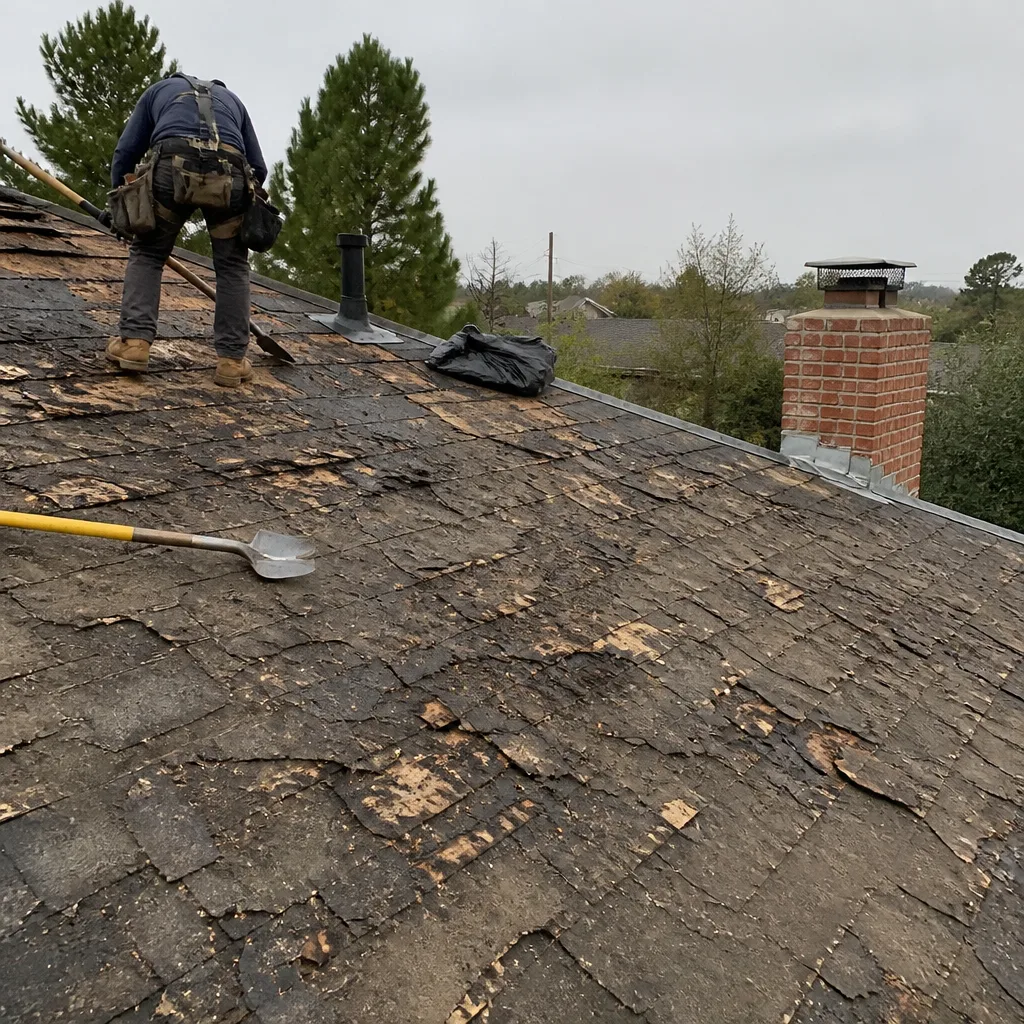
- Failed pipe boot seals. The rubber collar around plumbing vents degrades fast in salt air and sun. By winter, a cracked collar lets water run straight down the pipe into the house.
- Lifted shingle tabs. Santa Ana damage from two months earlier becomes a leak path once wind-driven rain hits from the northeast.
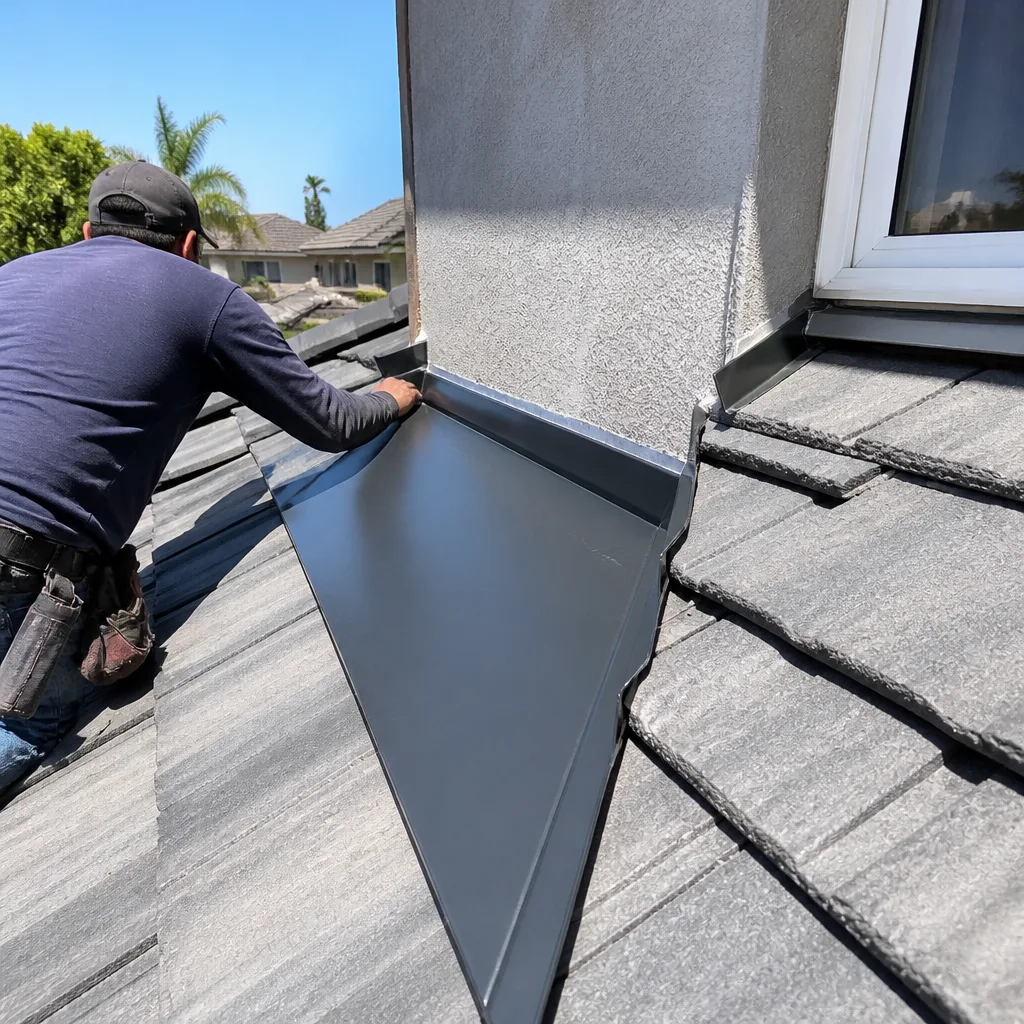
- Deteriorated flashing at roof-to-wall transitions. These junctions take constant thermal movement. When the sealant fails, wind-driven rain finds it.
- Overloaded gutters. Even clean gutters can overflow in a heavy atmospheric river. Gutters that were half-clogged going into winter will overflow into fascia and soffit, and the damage is slow and hidden.
During active storm season, the role of maintenance shifts from prevention to triage. If you see a leak, address it immediately. Water intrusion is not a wait-and-see problem. A small leak in December becomes a much larger repair by February. If you’re a Sunridge Roof Repair home customer, we’d rather hear from you at the first sign of a leak than after a ceiling has collapsed. Repair when repair is right. Replace when it’s not.
DIY Roof Check vs. Professional Inspection: A Decision Rule
Not every roof task in Newport Beach requires a paid professional. Some checks are genuinely safe and doable from the ground or a ladder. Others are not. Here’s the decision rule we give homeowners.
DIY is appropriate when:
- You’re doing a ground-level visual check with binoculars, looking for obvious lifted shingles, missing tiles, or visible flashing damage.
- You’re clearing debris from gutters using a stable ladder and proper safety practices, and you can do so without walking on the roof surface.
- You’re checking the attic for daylight penetration through the roof deck, water stains on rafters, or signs of condensation.
- You’re visually inspecting exposed flashing at roof edges and around satellite dishes or solar mounts from a ladder.
A professional inspection is warranted when:
- The roof is more than ten years old and hasn’t been professionally inspected in two or more years.
- You see granule loss in gutters, which signals advanced shingle wear that needs assessment.
- There are visible water stains on interior ceilings or walls, even if they’re small and old.
- You recently bought the home and don’t have a reliable maintenance history.
- The roof has known repairs from previous owners, and you want a baseline condition assessment.
- You’re not comfortable being on the roof, and that’s fine. Roofing has real risks. Steep pitches, slick surfaces, and hidden structural damage are all reasons to let a trained professional handle it. No maintenance task is worth a fall.
For Newport Beach homeowners, the best timing for a professional inspection is mid-September through late October. That gives you the pre-rain window to complete any recommended repairs. We offer replacement guidance only when the roof genuinely needs it, and we’ll tell you plainly if repair is the right call instead.
Material-Specific Notes: Tile, Shingle, and Metal Roofing
Newport Beach has a mix of roofing materials, from Spanish tile on older custom homes to asphalt shingle on mid-century tracts in Westcliff and Dover Shores. Each material responds differently to the four stress periods, and each needs season-specific attention.
Tile Roofs (Concrete and Clay)
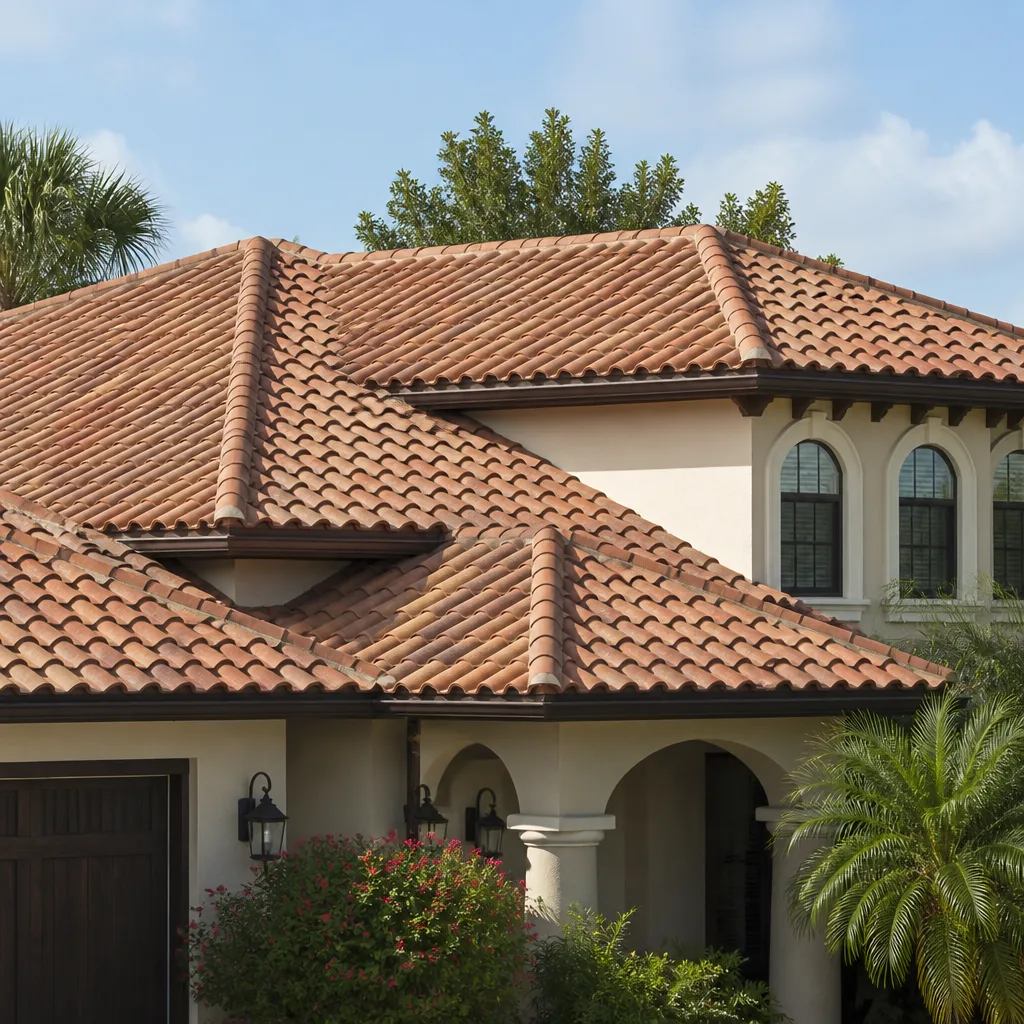
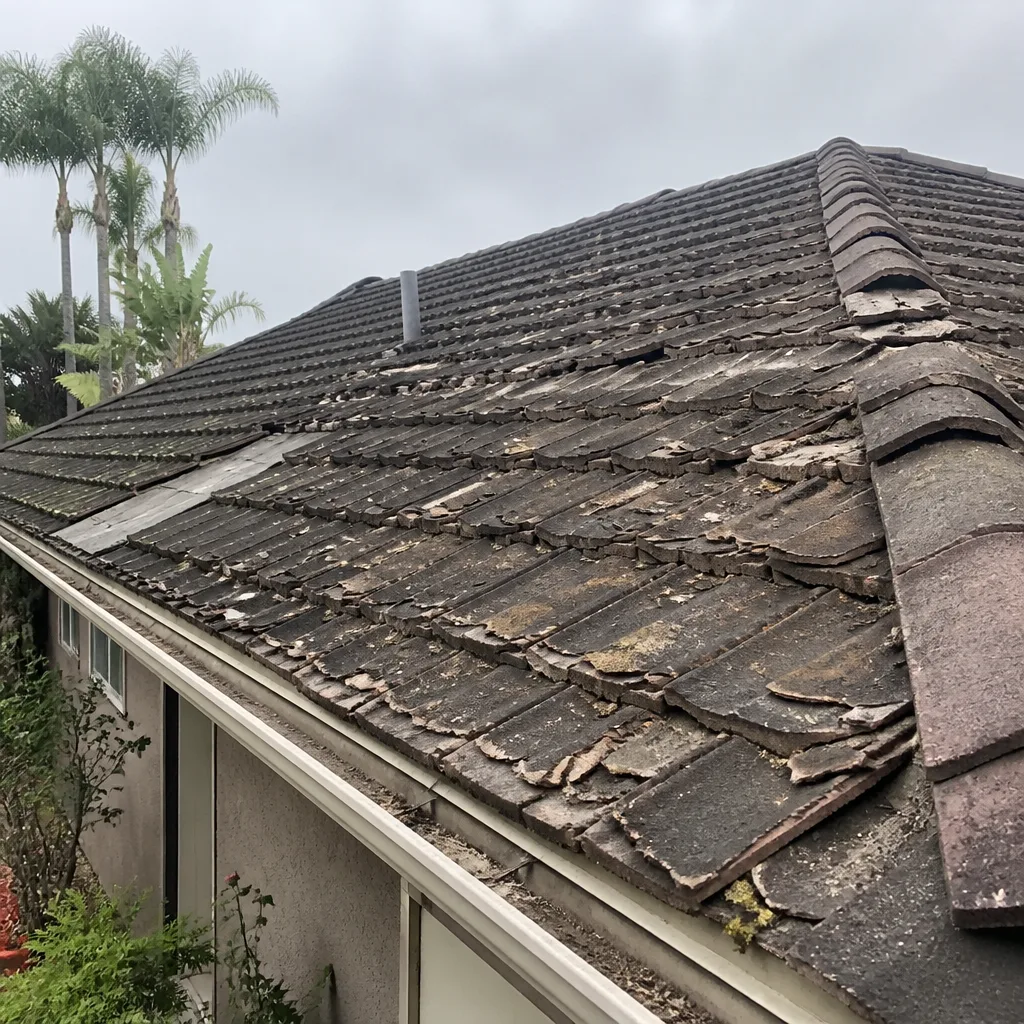
Tile roofs dominate in Newport Beach’s custom home neighborhoods, and they’re built to last. But tiles themselves are only half the system. The underlayment beneath them is the real waterproofing layer, and underlayment fails long before tiles do. Salt fog accelerates underlayment deterioration at exposed edges, and the thermal cycling from Santa Ana heat causes hairline cracks in mortar bedding and movement at hips and ridges. During storm season, water enters through a cracked tile or a failed mortar joint and runs across the underlayment until it finds a seam. The fix is not always a full replacement. Individual tile repair and re-bedding are common and cost-effective when done before the underlayment is compromised.
Asphalt Shingle Roofs
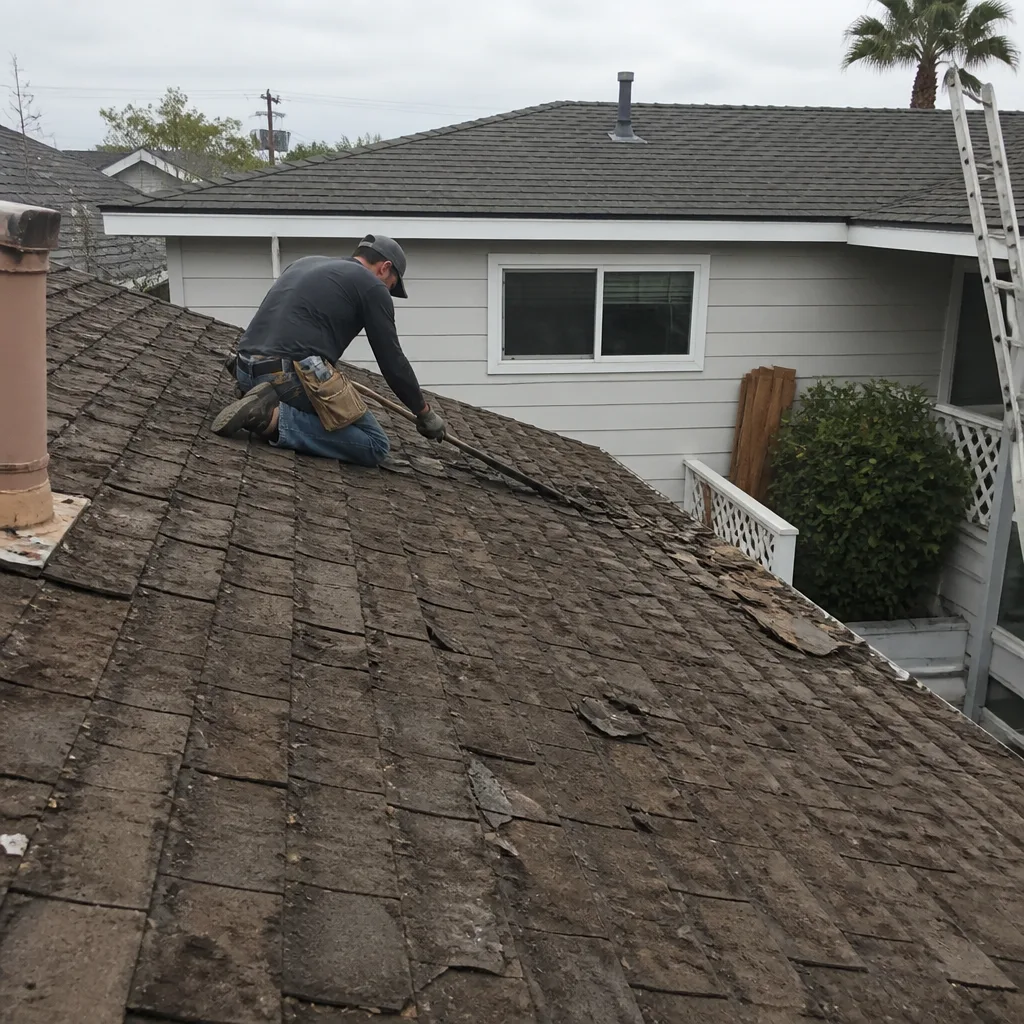
Shingles are the workhorse material in Newport Beach’s tract neighborhoods. The critical factors here are granule loss, seal strip integrity, and UV degradation. Salt air does not directly damage shingles the way it damages metal, but the constant moisture-humidity cycling accelerates the breakdown of the asphalt’s flexibility. After a few Santa Ana seasons, shingles that should still bend start to crack instead. We source asphalt products from manufacturers like Atlas, Tamko, and IKO, and the main thing homeowners should know is that not all shingle lines are equal in this climate. The right product for a Newport Beach roof is one rated for high wind and algae resistance, because coastal humidity plus organic debris growth is a real thing here.
Metal Roofing and Metal Components
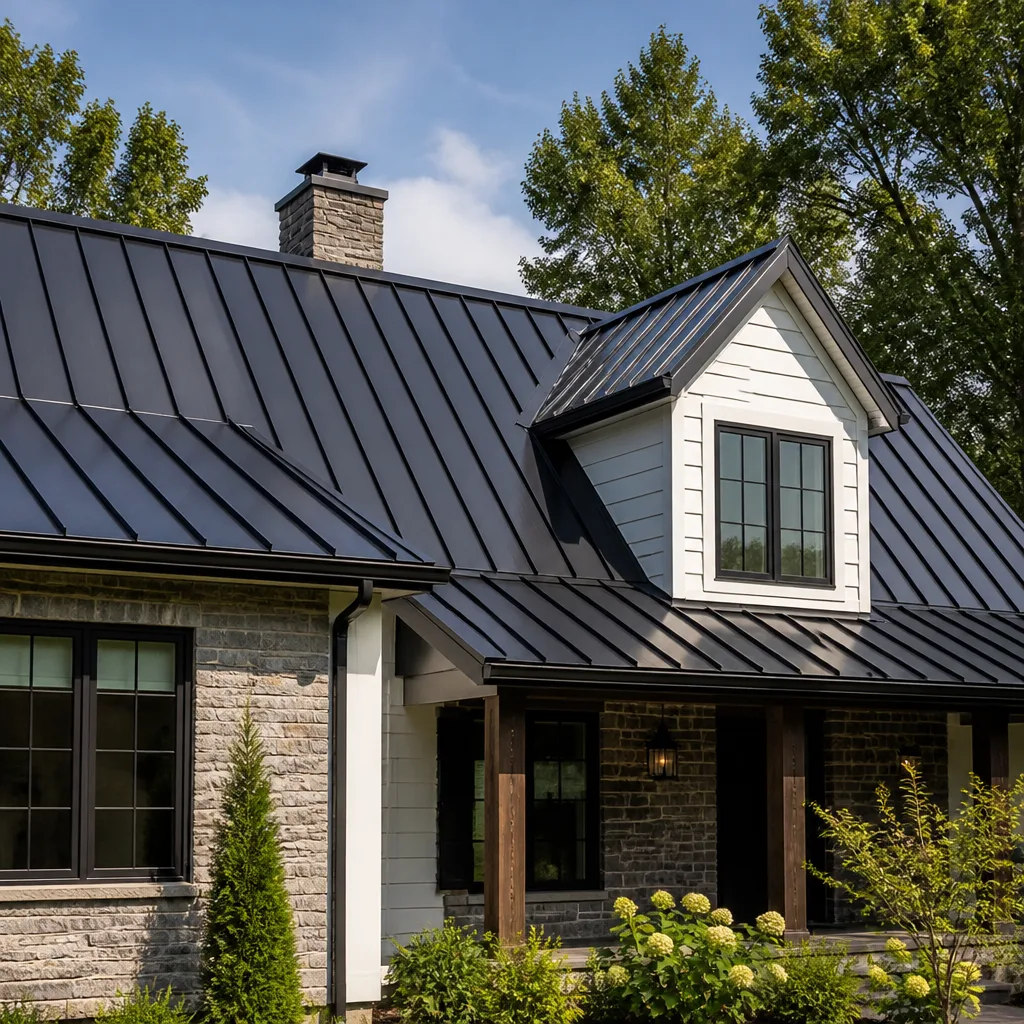
Standing seam metal roofs are less common in Newport Beach, but every roof has metal components: flashing, valleys, vents, fasteners. Salt corrosion is the primary enemy. The treatment is annual, not periodic. Clean the visible metal, check for corrosion at fasteners, and address any rust before it becomes a perforation. This is true even on newer roofs. Salt air does not care how expensive your flashing was.
Your choice of materials matters, and our guide to choosing the right roofing brand can help you understand why we work with the brand that fits your roof and your budget, whether that’s a premium line from Owens Corning or a value-tier option from IKO. What matters is that the material matches the specific exposure of your Newport Beach home.
Common Mistakes to Avoid
- Waiting until it rains to think about the roof. By the time water is coming through the ceiling, the problem has been developing for months. The pre-rain window is the cheapest and fastest time to fix it. Newport Beach December rain is predictable, and the roof damage it reveals is equally predictable.
- Ignoring granule loss as “normal wear.” Some granule loss is normal. A sudden increase after Santa Ana winds is a signal. When you see granules in gutters, note the amount and check again next month. If it’s increasing, the shingles are aging faster than expected.
- Painting over water stains instead of investigating the source. A fresh coat of paint hides the stain but not the leak. The water will find a new path and the damage will double. This is one of the most common things we see in Newport Beach homes that are being prepped for sale.
- Assuming tile roofs are maintenance-free. Tiles are durable, but the underlayment and mortar are not. Tile roof failures are invisible until the ceiling shows water. Annual inspection of tile roofs is just as important as shingle roofs.
- Delaying small flashing repairs. A cracked pipe boot is a $200 repair today and a $2,000 ceiling and insulation repair after one winter. The cost difference is an order of magnitude, and the timeline between the two is usually one storm.
- Cleaning gutters in January instead of October. By January, the debris has already caused the overflow. The damage is done. Clean gutters in October, right after the Santa Ana season ends, and you’ve solved the problem before it exists.
- Hiring a generalist who “also does roofs.” Roofing is a specialized trade. A general contractor who does kitchens, bathrooms, and “also roofs” does not have the same depth of knowledge about flashing details, underlayment systems, or coastal material selection. Roof repair done by a roofing specialist lasts longer and costs less over time. Roofing only.
When to Call a Professional
Some roof situations in Newport Beach simply should not be handled by a homeowner. Active leaks during a storm, visible sagging in the roofline, missing sections of flashing, or any situation where you’d need to walk on a steep or slippery roof surface, these all warrant a professional. The same goes for roofs over fifteen years old that have never had a full inspection, and any roof where you’re seeing repeated issues in the same area. When you call Sunridge Roof Repair, we start with an inspection, not a quote for replacement. We inspect before we recommend, and if the roof can be repaired, that’s what we’ll tell you. Sunridge Roof Repair offers free estimates in Newport Beach. Call (833) 589-5180.
Frequently Asked Questions
Once a year is the right cadence for most Newport Beach homes, with the ideal timing between late September and late October. This positions the inspection after Santa Ana season and before the first heavy winter rain. Homes within a mile of the coast, where salt fog exposure is heaviest, benefit from a second visual check in late spring. Call (833) 589-5180 to schedule an inspection.
Roof inspection pricing in Newport Beach typically ranges from $150 to $400 depending on roof size, pitch, and materials, but many homeowners find the cost is credited back if repairs are needed. At Sunridge, inspection is offered as a standalone service, not conditional on buying a replacement. Call (833) 589-5180 for current inspection pricing.
The earliest signs of roof damage in a coastal climate like Newport Beach are granule loss in gutters, visible corrosion on flashing, lifted shingle edges after wind events, and cracking sealant around vents and pipes. Inside the home, watch for water stains on ceilings, peeling paint near rooflines, and unexplained musty smells in the attic. Any of these warrant closer investigation in the pre-rain window.
Not automatically. An old roof that is not leaking may still have several years of service life, and replacement is not always the right call. The right move is inspection first. If the underlayment is intact and flashing is sound, targeted repair can extend the life of the roof safely through winter. If the inspection shows systemic failure points, replacement before storm season is the smart money. We’ll give you the honest guidance either way.
Yes, salt air is one of the most underrated roof stressors in Newport Beach. Salt-laden fog deposits corrosive residue on metal flashing, vents, and fasteners. Over multiple marine-layer seasons, that residue causes pitting and rust on components that would remain sound in inland climates. The treatment is annual inspection and cleaning of exposed metal, with replacement of any components showing corrosion at fastener points.
There is no single best material, and any contractor who tells you otherwise is selling inventory, not solving your problem. Coastal Newport Beach roofs benefit from materials with high wind ratings and algae resistance for shingles, or high-quality underlayment beneath tile. The right choice depends on your home’s exposure, pitch, and budget. We work with brands including Owens Corning, Atlas, and Tamko so we can match the product to the roof rather than the other way around. Call (833) 589-5180 and we’ll talk through your options.
The Bottom Line
Newport Beach roofs face a specific stress cycle that has little to do with conventional seasons. Marine-layer salt, Santa Ana thermal cycling, the narrow pre-rain window, and the active storm season each place different demands on your roof. The homeowners who avoid water damage are the ones who do their roofing maintenance in October, not January. Clean the drainage paths, inspect the flashing, check for wind damage, and if the roof is over ten years old or shows any warning signs, schedule a professional inspection before the first atmospheric river arrives. For more guides & resources, visit our blog. Sunridge Roof Repair is a roofing specialist serving Newport Beach, and we’re glad to look at your roof before you need us in an emergency. Call (833) 589-5180 for a free estimate.
Written by the team at Sunridge Roof Repair, serving Newport Beach since 2011.
See the difference
 Before
 After
 Before
 After
 Before
 After